Beginner Sourdough Basics (A Simple, From-Scratch Guide)
Last Updated on January 1, 2026 by Stephanie Gilpin
If you’re new to sourdough, it can feel like everyone else knows something you don’t. There are endless opinions online about the right flour, the perfect feeding ratio, or the exact schedule you’re supposed to follow.

The truth is, sourdough is much more forgiving than it’s made out to be.
At its core, sourdough is simply flour, water, time, and learning to pay attention. This beginner sourdough basics guide is meant to help you understand how sourdough actually works, what truly matters when you’re starting out, and how to build confidence without chasing perfection.
There is no single “correct” way to do sourdough — the best way is the one that works for you and your family.
What Is Sourdough?
Sourdough is a method of baking that relies on natural fermentation instead of commercial yeast. A sourdough starter is a living culture made from flour and water that captures wild yeast and beneficial bacteria from the environment.
That starter becomes the leavening agent for bread and other baked goods, giving sourdough its rise, flavor, and structure over time.

Sourdough baking moves more slowly than yeast baking, but that slower pace is what makes it flexible. Once you understand the basics, it can easily fit into real life.
What You Need to Get Started (And What You Don’t)
You don’t need much to bake sourdough, especially in the beginning.
What you actually need:
- Flour
- Water
- A jar or bowl
- A spoon or spurtle for mixing
A kitchen scale can be helpful, but it’s not required. I don’t use a scale when feeding my starter — I look for a thick consistency instead.
Helpful but optional tools:
- Bench scraper
- Dutch oven or covered baking vessel
- Thermometer for internal bread temperature (to ensure doneness)
- Kitchen Scale (many sourdough recipes list precise measurements)
It’s easy to think you need special equipment, but learning by feel is often more valuable than relying on tools.
Understanding a Sourdough Starter
Your sourdough starter is the foundation of everything you’ll bake. Rather than thinking of it as something delicate or fragile, it helps to think of it as resilient and adaptable.
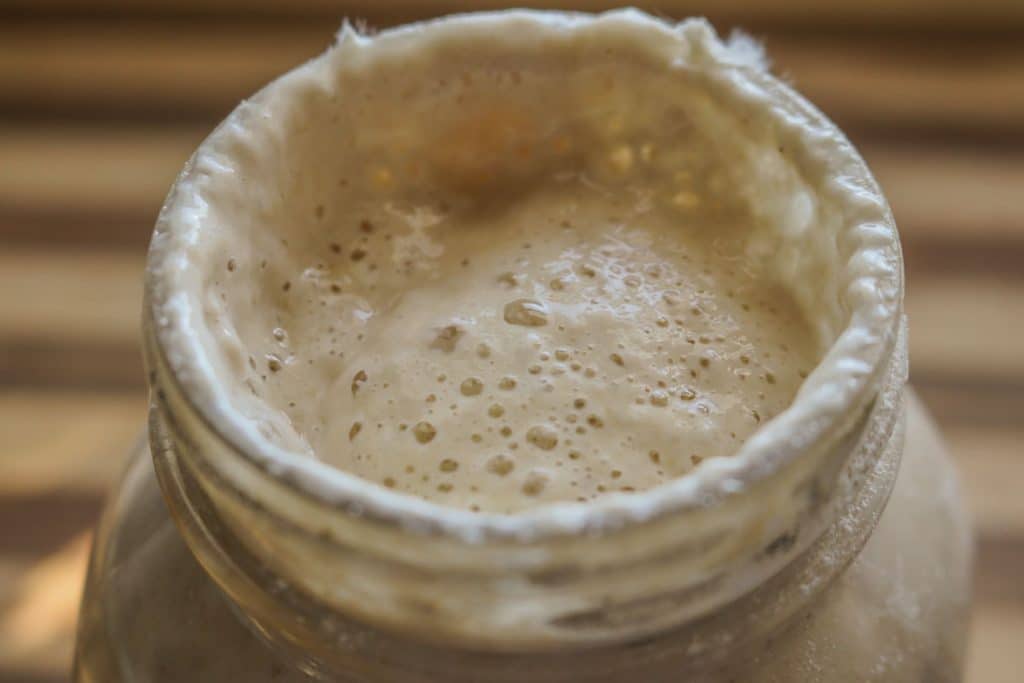
A healthy starter should:
- Rise after feeding
- Look bubbly or active at some point
- Smell pleasant (slightly tangy or yeasty)
A starter does not need to double perfectly every time to be usable. Consistency and predictability matter more than dramatic rise.
I’ll teach you how to use the “float test” to make sure your sourdough starter is ready to bake with every time!
It’s actually quite hard to truly “ruin” a sourdough starter. Trial and error is part of the process, and most problems can be fixed with a few good feedings.
How I Feed My Starter (Simple & Flexible)
When feeding my starter, I aim for roughly a 1:1 ratio of flour to water, but I don’t measure with a scale. Instead, I look for a thick batter consistency — something that stirs easily but isn’t runny.
I mix my starter with a spoon or spurtle until everything is well combined, then let it do its thing.
For flour, I prefer:
- Unbleached, unenriched all-purpose flour
(My favorite comes from Azure Standard, but King Arthur unbleached all-purpose flour is widely available and works very well.)
Even though I bake often with freshly milled flour, I prefer to keep my starter fed with all-purpose flour. It helps slow down over-fermentation and keeps the starter more stable over time.
For a more complete breakdown of how I feed my starter, checkout my guide to maintaining a sourdough starter.
There is no need to overthink feeding — simple and consistent works best.
Where I Keep My Starter (And Why)
I keep my sourdough starter in the refrigerator most of the time.
When I want to bake, I pull it out, feed it, and let it wake up. This approach makes sourdough much more manageable and reduces the chance of a starter getting neglected or going bad.
Keeping a starter cold:
- Slows fermentation
- Makes maintenance easier
- Allows you to bake on your schedule
For extra peace of mind, I also keep backup starter on hand by freezing sourdough starter and rehydrating dehydrated sourdough starter, so I always have a way to revive it if needed.
This way, I always have a backup if I need it.
Timing Matters — But Not the Clock
One of the biggest beginner frustrations with sourdough is timing. Unlike commercial yeast, sourdough responds to its environment.
Fermentation speed depends on:
- Room temperature
- Starter strength
- Dough hydration
Instead of watching the clock, it’s more helpful to watch the dough. Learning what properly fermented dough looks and feels like will take you much farther than memorizing exact timelines.
Warm kitchens move faster. Cool kitchens move slower. Both can work beautifully.
What Beginners Should Bake First
You don’t need to jump into complicated recipes right away.
Beginner-friendly sourdough recipes include:
- No-knead sourdough bread
- Simple discard recipes
- Bakes that don’t require precise shaping
These types of recipes allow you to focus on fermentation and dough behavior without added pressure.
This is why I recommend starting with a no-knead beginner sourdough loaf — it’s forgiving, flexible, and a great way to build confidence.
Common Beginner Mistakes (And Why They’re Normal)
If your dough feels sticky, dense, or unpredictable, you’re not doing anything wrong.
Common beginner challenges include:
- Dough that feels wetter than expected
- Bread that doesn’t rise as much as hoped
- Over- or under-proofing
These issues almost always come down to timing, temperature, or hydration — not failure.
Sourdough is a skill learned through observation, not perfection, and even loaves that don’t turn out as planned can still be delicious. In fact, one of my most popular recipes uses over-proofed dough to make focaccia, proving that “mistakes” are often just a different path to good bread.
Every loaf teaches you something.
A Gentle Note on Fresh Milled Flour
Fresh milled flour works beautifully in sourdough, but it behaves differently than store-bought flour. It absorbs more liquid and ferments more actively, which can take some adjustment.
If you’re new to sourdough, it’s perfectly fine to learn the basics first using all-purpose flour and then branch into fresh milled flour baking later. Both approaches have their place, and neither is better — they’re just different.
Where to Go Next
If you’re just getting started:
As your confidence grows, you can explore more structured breads, troubleshooting techniques, and baking with fresh milled flour.
Sourdough isn’t about doing everything at once. It’s about building familiarity over time.
Final Thoughts
Sourdough doesn’t need to be perfect to be good. Some of the best loaves come from learning what didn’t work and adjusting next time. If your starter is alive and you’re baking regularly, you’re already doing it right!