
How to Make Focaccia with Overproofed Sourdough
Last Updated on September 11, 2026 by Stephanie Gilpin
If you’ve accidentally overproofed your sourdough, don’t throw it away! You can turn that sticky, deflated dough into delicious homemade focaccia.
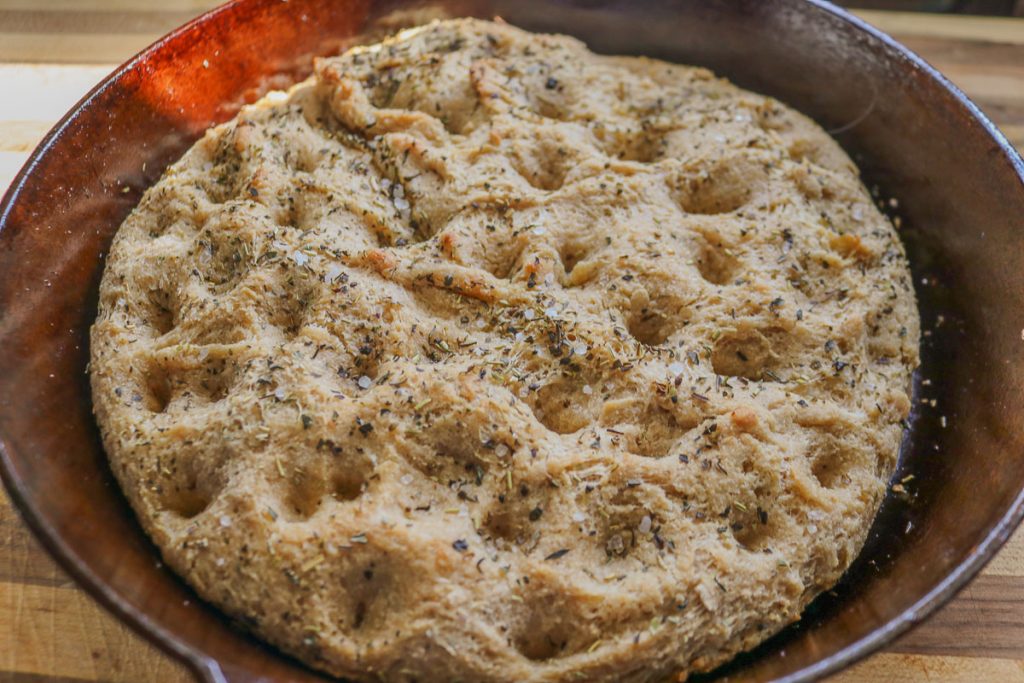
I’ve used this simple method many times when my sourdough has fermented too long and is no longer strong enough to shape into a loaf.
Instead of starting over, I spread the dough in a well-oiled cast-iron skillet, add plenty of olive oil and seasonings, and bake it until it is golden and crispy around the edges.
This method works with most basic sourdough bread doughs, including sandwich bread dough and traditional sourdough boule dough.
How to Make Focaccia from Overproofed Sourdough
As a homesteader and someone who loves cooking from scratch, there’s a certain satisfaction in turning something that seems like a waste into something delicious.
If you’ve ever wondered what to do with over-proofed sourdough, this is the perfect solution!
Not only does it save your precious dough, which is filled with gut-healthy bacteria from the fermentation process, but you’ll also get to enjoy the crispy, chewy goodness of focaccia.
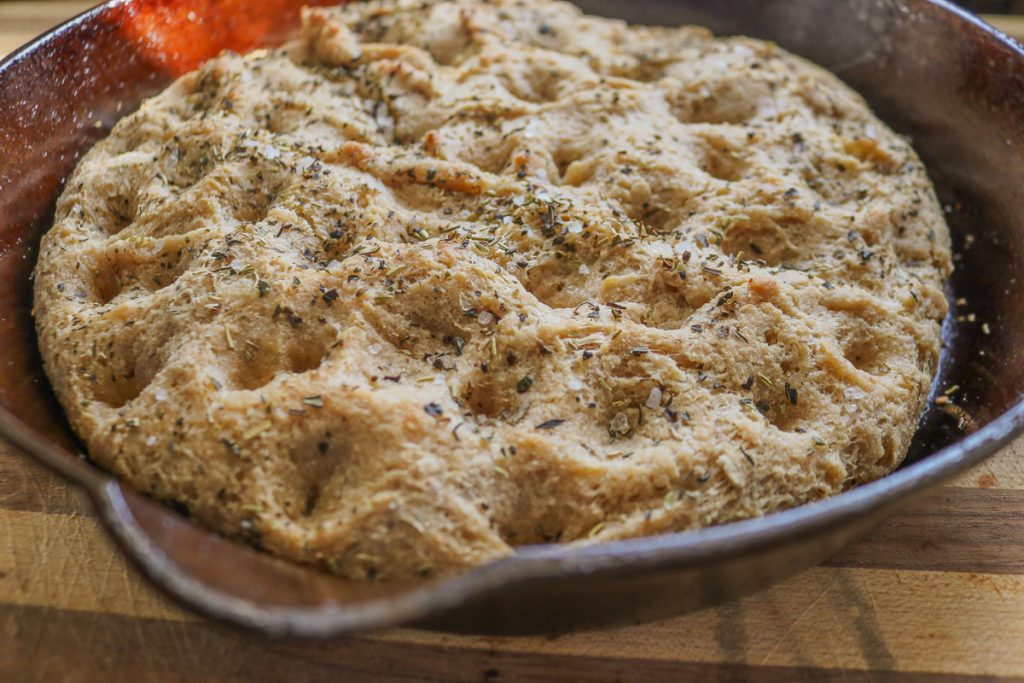
This method works with most basic sourdough bread doughs, including sandwich bread dough and traditional sourdough boule dough. It is one of the easiest—and tastiest—ways to use over-proofed sourdough.
Can You Still Use Overproofed Sourdough?
Yes, overproofed sourdough can usually still be used.
Although the dough may be too sticky or weak to shape into a traditional loaf, it can still make delicious focaccia. Spreading the dough into an oiled pan allows the pan to hold its shape while it bakes. The olive oil also helps create the golden, crispy edges that make focaccia so delicious.
Overproofed dough may not rise as much as properly proofed focaccia dough, but it can still bake into a soft and flavorful bread.
How Do You Know If Sourdough Is Overproofed?
Overproofed sourdough will usually show several of these signs:
- It rose well and then began to deflate.
- It feels unusually sticky and difficult to handle.
- It spreads instead of holding its shape.
- It is difficult or impossible to create tension while shaping.
- An indentation remains when you gently press the dough with your finger.
- The surface may look wrinkled, bubbly, or sunken.
If your dough is still holding its shape and slowly springs back when pressed, it may not be overproofed yet. However, if it spreads across the counter and will not hold its shape no matter how many times you try to shape it, focaccia is a great option.
Why Overproofed Sourdough Works Well for Focaccia
A traditional sourdough loaf needs enough strength to hold its shape and rise upward in the oven. Once sourdough has overproofed, it may no longer have that strength.
Focaccia is much more forgiving because it is baked in a pan. Instead of asking the dough to stand tall on its own, you can gently spread it out and let the pan support it.
You also do not need to score the dough or create a perfectly shaped loaf. A generous amount of olive oil helps the outside become golden and crispy while the inside stays soft.
This post contains affiliate links. As an Amazon Associate, I earn from qualifying purchases.
What Kind of Sourdough Dough Can You Use?
Most basic sourdough bread doughs can be turned into focaccia after they have overproofed.
I most often use my easy no-knead sourdough “unloaf” dough. It does not require kneading or stretch-and-folds, which makes it a great bread recipe for busy days.
Unfortunately, that also means I occasionally forget about it and let it proof a little too long!

You can also use:
- Sourdough sandwich bread dough
- Traditional sourdough boule dough
- Whole-wheat sourdough dough
- Other basic savory sourdough bread doughs
I would avoid using a heavily sweetened or enriched dough unless you plan to make a sweet focaccia. Dough containing large amounts of sugar, butter, eggs, or milk may bake differently from a basic flour, water, starter, and salt dough.
Ingredients:
You only need a few ingredients to turn overproofed sourdough into focaccia:
- Overproofed sourdough bread dough
- Three to four tablespoons of olive oil
- Flaky sea salt or coarse salt
- Herbs and other toppings, if desired
Because olive oil adds so much flavor to focaccia, I recommend using an olive oil that you enjoy.
Helpful Kitchen Tools:
- 10″ Cast iron skillet or other oven safe baking dish
- Optional- Instant read thermometer-I like to take the internal temperature of my bread to ensure the perfect bake, every time.
- A flexible dough scraper or spatula
- A cooling rack
I prefer a cast-iron skillet because it creates beautifully crisp edges and makes a pretty round loaf. However, you do not have to use cast iron to make this recipe.
What Size Pan Should You Use?
The best pan size will depend on how much dough you have and how thick you want your focaccia to be.
I aim for the dough to be approximately 1 to 1½ inches thick after it has been spread into the pan. A thicker layer will produce a softer, breadier focaccia, while a thinner layer will give you more crispy edges.
My no-knead sourdough loaf makes approximately 1,230 grams of dough and fits in my 10-inch cast-iron skillet. You can also use a small sheet pan, metal baking pan, or other oven-safe baking dish.
If you have more dough than will comfortably fit in your pan, divide it between two pans rather than crowding it into one very thick layer.
How to Make Focaccia from Overproofed Sourdough:
1. Bring Refrigerated Dough to a Workable Temperature
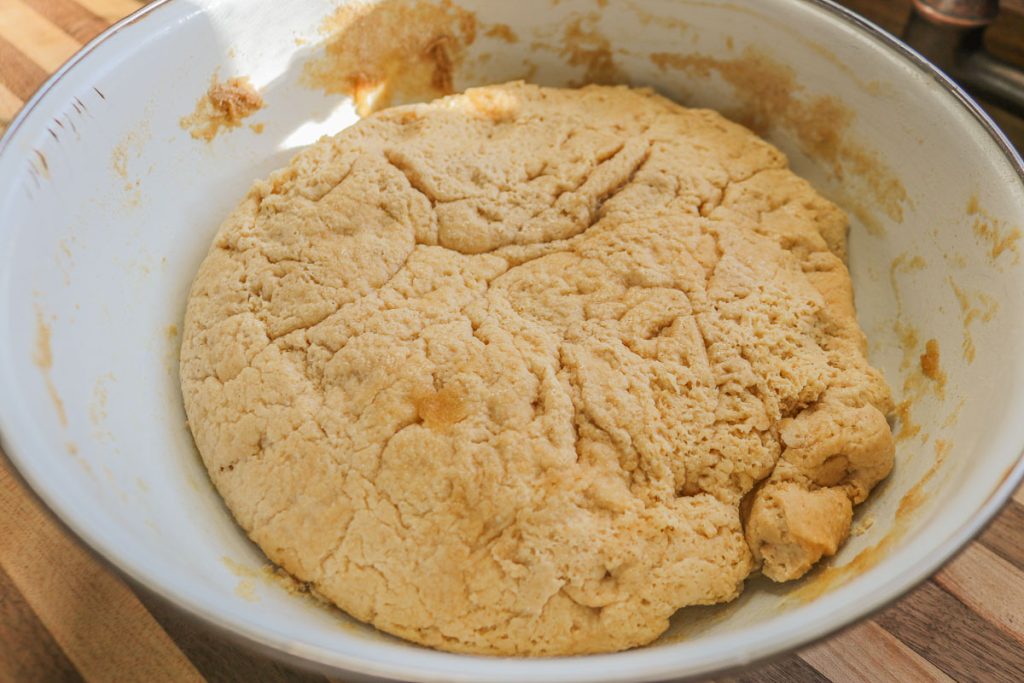
If your dough has been in the refrigerator, let it sit on the counter just until it is soft enough to spread without tearing.
It does not necessarily need to become completely warm. If the dough is already extremely sticky and deflated, avoid leaving it out for another long rise.
2. Prepare the Pan
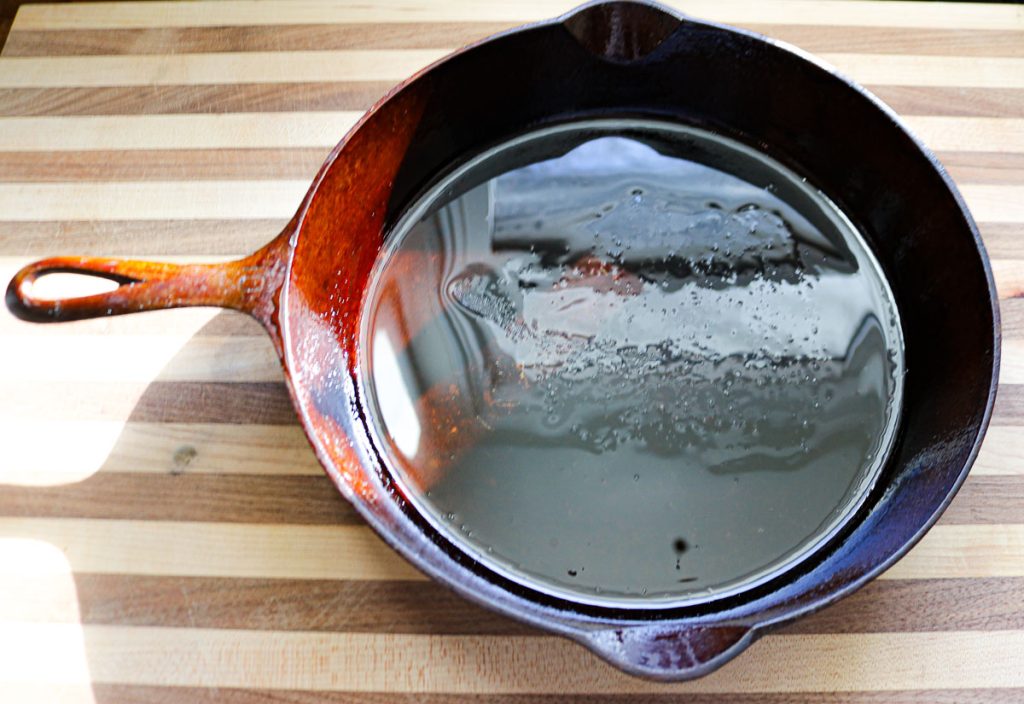
Generously coat the bottom and sides of a 10-inch cast-iron skillet or another oven-safe baking dish with olive oil.
Do not be stingy with the oil. It keeps the dough from sticking and helps create a flavorful, crispy crust around the bottom and edges.
I do not use parchment paper or foil because I want the dough to come into direct contact with the oiled pan.
3. Transfer the Dough to the Pan
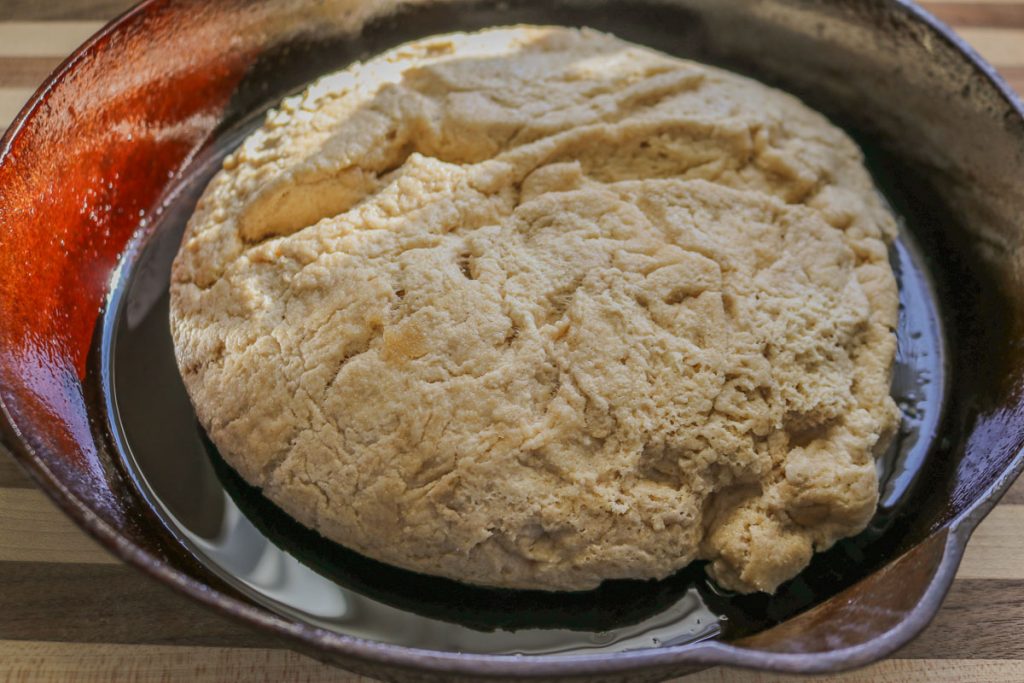
Gently turn the overproofed sourdough into the prepared pan.
Use lightly oiled or damp hands to press the dough into an even layer approximately 1 to 1½ inches thick. The dough will probably feel sticky and may not look perfectly shaped. That is completely fine!
Avoid kneading or aggressively reshaping it. You want to keep as many of the remaining air bubbles as possible.
If the dough keeps shrinking back while you press it, let it rest in the pan for about 10 minutes. Then gently press it outward again.
4. Dimple the Dough
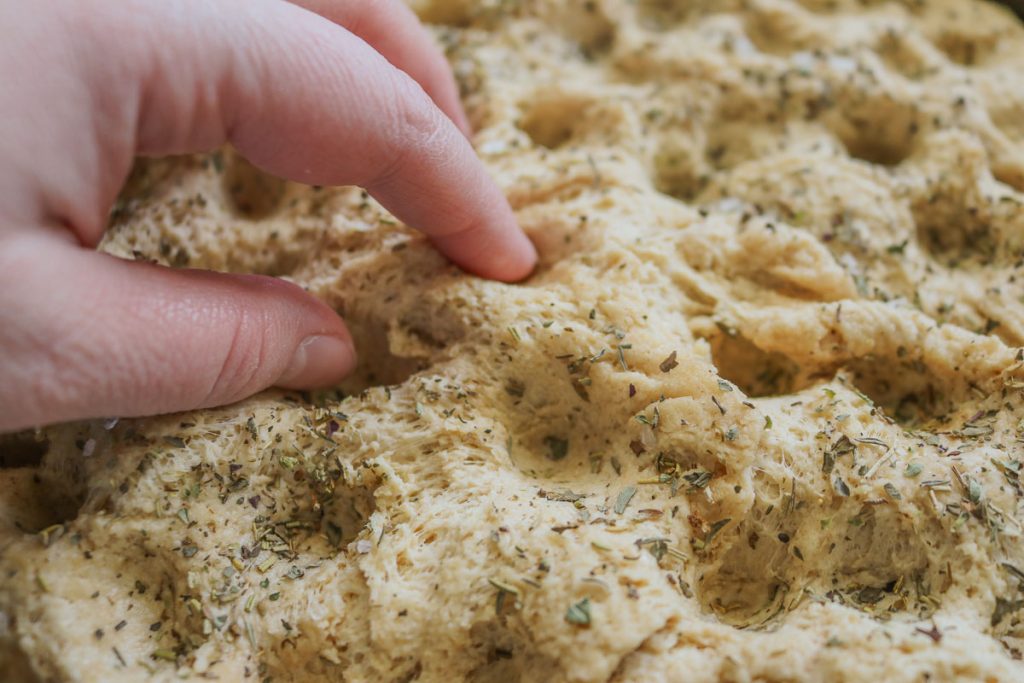
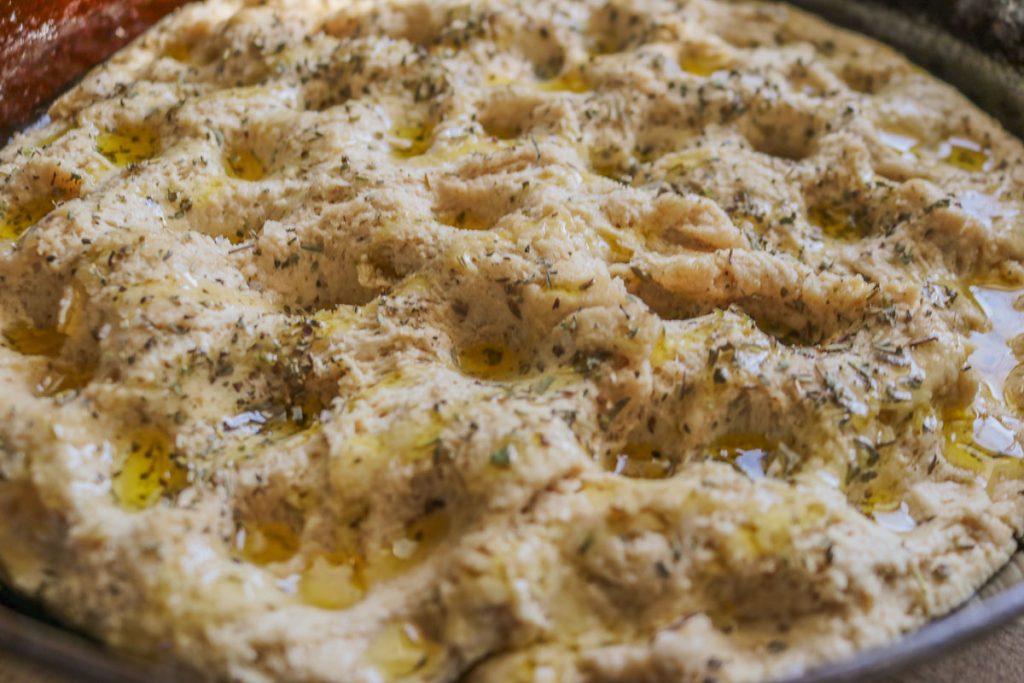
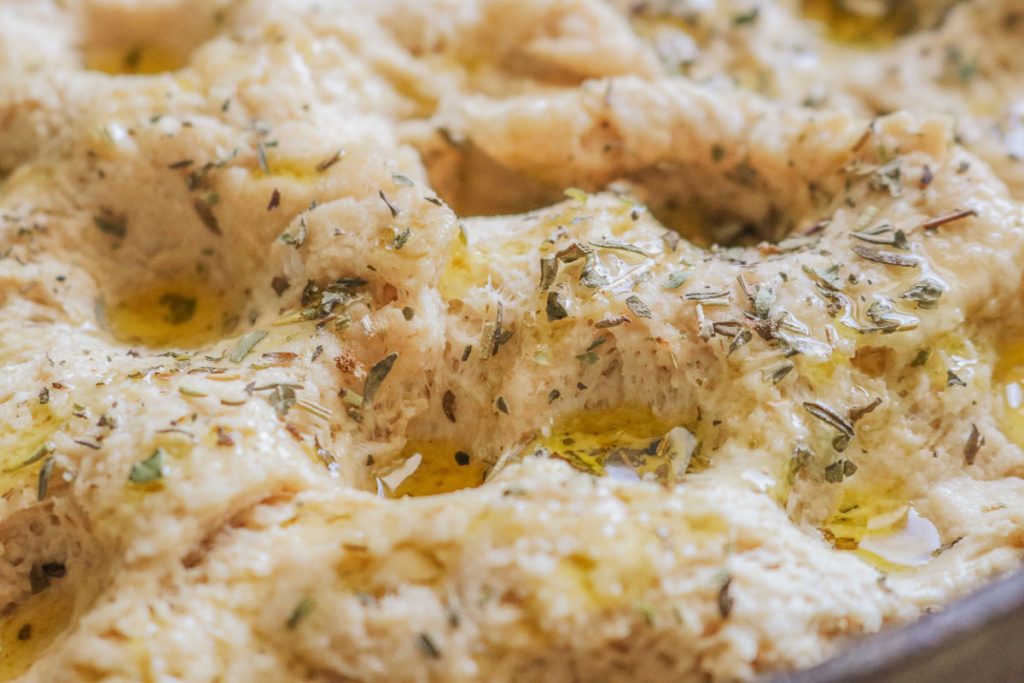
Wet or lightly oil your fingertips and press them into the surface of the dough to create the traditional focaccia dimples.
Press firmly enough to make small wells without pushing all the way through the dough. The dimples will collect some of the olive oil and seasonings as the bread bakes.
5. Add Olive Oil and Toppings
Drizzle the remaining olive oil generously over the top of the dough. Sprinkle it with flaky salt and your choice of herbs or toppings.
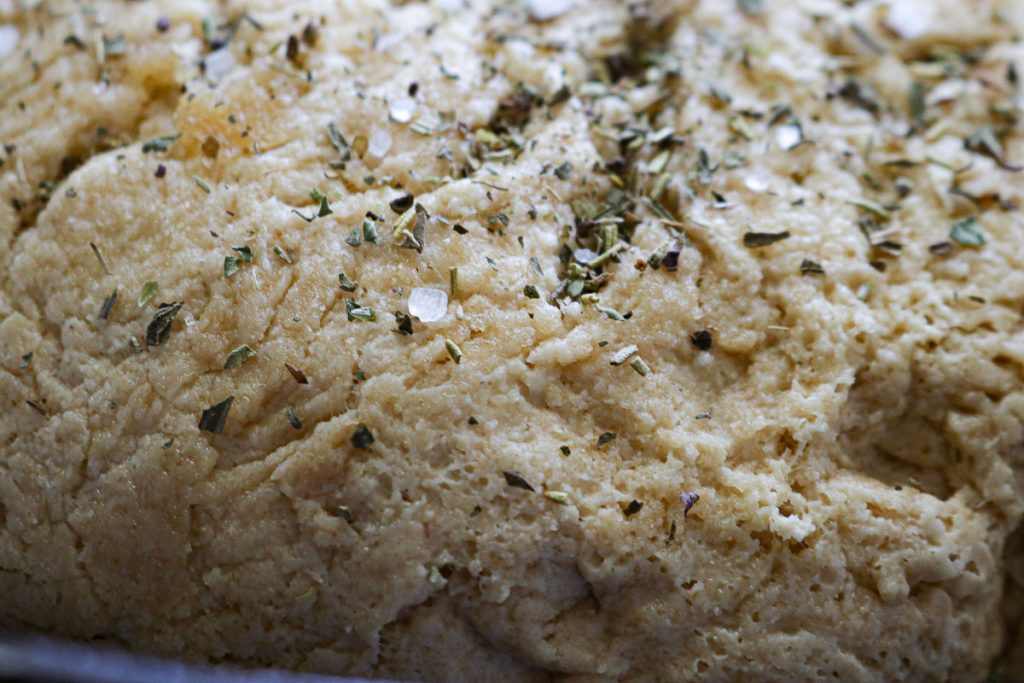
My favorite simple combination is herbs de Provence and flaky sea salt, but you can use whatever you already have growing in the garden or tucked away in the pantry.
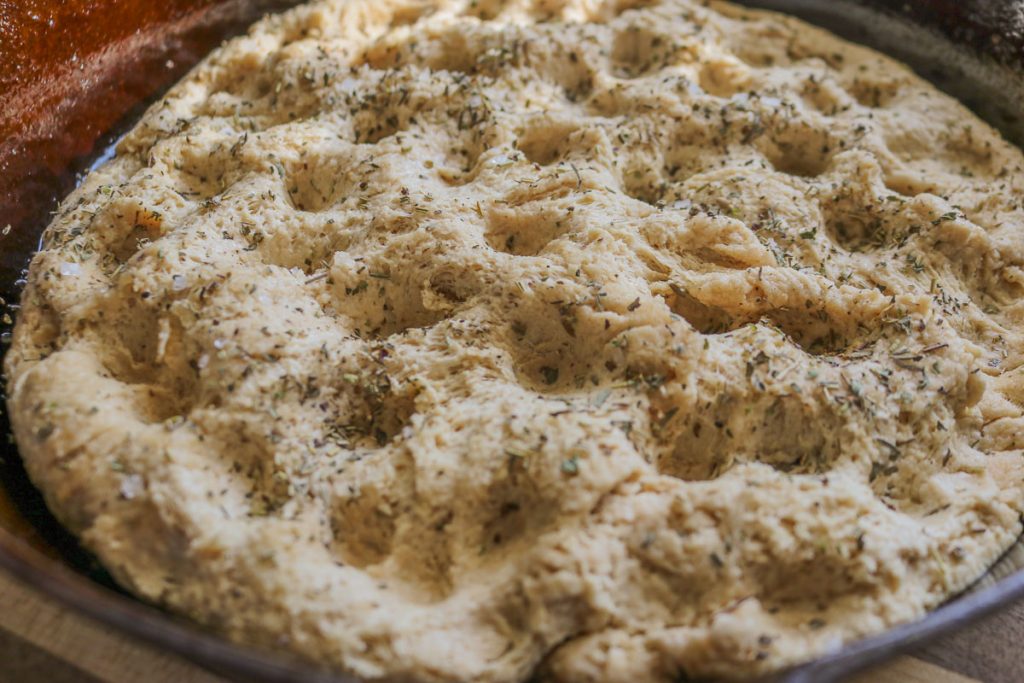
I recommend using a good quality olive oil with a good taste as the flavor will really shine through in this bread.
5. Drizzle with Olive Oil
Generously drizzle olive oil over the top of the dough. Don’t be shy with it—the more, the better! The oil will soak into the dough, creating that perfectly crispy, golden crust while keeping the inside soft and airy. I would estimate I use at least 3-4 tablespoons to generously coat the top of the dough.
6. Bake the Focaccia
Preheat the oven to 425°F.
Bake the focaccia for 20 to 25 minutes, or until the top and edges are golden brown. The exact baking time will depend on the thickness of your dough and the type of pan you use.
For additional accuracy, check the center with an instant-read thermometer. The internal temperature should be approximately 205–210°F.
Carefully lift one edge with a spatula and check the bottom. It should also be golden brown and crisp.
7. Cool and Serve
Let the focaccia cool in the pan for approximately 10 minutes. Carefully loosen the edges and transfer it to a cooling rack.
Serve it warm with butter, olive oil and balsamic vinegar, soup, pasta, or your favorite from-scratch meal.
You can also slice it horizontally and use it as flavorful sandwich bread.
Focaccia Topping Ideas
One of the best things about focaccia is how easy it is to customize. You can keep it simple or add whatever ingredients you have on hand.
Try one of these combinations:
- Rosemary and flaky sea salt
- Garlic and Parmesan
- Herbs de Provence
- Italian seasoning and coarse salt
- Kalamata olives and rosemary
- Caramelized onions
- Oil-packed sun-dried tomatoes
- Sliced onions and fresh herbs
- Cherry tomatoes and garlic
If you use sun-dried tomatoes, I recommend choosing tomatoes packed in oil. Lightly press them into the dough instead of scattering them loosely across the top. Dry pieces of tomato can burn quickly in the oven.
Cinnamon-Sugar Focaccia
Overproofed sourdough can also be turned into a sweet cinnamon-sugar focaccia.
For a sweet version, use melted butter or a mild-tasting oil on top of the dough. Sprinkle it generously with cinnamon and brown sugar before baking. Once the focaccia has cooled slightly, drizzle a simple powdered-sugar glaze over the top.
Tips for the Best Focaccia:
Handle the Dough Gently
Overproofed dough has already lost some of its strength. Avoid kneading it or repeatedly trying to reshape it into a smooth ball. Transfer it directly to the oiled pan and press it out gently.
Use Wet or Oiled Hands
The dough will probably be sticky. Wet or lightly oil your hands before pressing and dimpling it to keep the dough from sticking to your fingers.
Don’t Skimp on the Olive Oil
Olive oil gives focaccia its flavorful, crispy crust. Make sure the bottom of the pan and the top of the dough are both well coated.
Pay Attention to Thickness
The thickness of the dough will affect both the texture and baking time. Thinner focaccia will bake more quickly and become crispier. Thicker focaccia may need a few additional minutes in the oven.
Bake Until Deeply Golden
Do not remove the focaccia as soon as it begins to turn pale gold. Let the top, edges, and bottom develop a rich golden-brown color (but not burned) for the best flavor and texture.
How to Store and Reheat Focaccia
Allow the focaccia to cool completely before storing it.
Keep leftover focaccia in an airtight container, storage bag, or beeswax bread bag at room temperature. It will have the best texture when eaten within one to two days.
To restore some of the crispy texture, reheat the focaccia in a 350°F oven for approximately 5 to 10 minutes. You can also warm individual slices in a skillet or toaster oven.
For longer storage, wrap the focaccia well and freeze it. Thaw it at room temperature and reheat it in the oven before serving.
Frequently Asked Questions
Does Overproofed Sourdough Need to Rise Again?
Usually, no. The dough has already proofed for too long, so it does not need another full rise.
Once you transfer it to the pan, you can bake it as soon as the oven is preheated. If the dough is difficult to spread, let it rest for about 10 minutes and then gently press it out again.
Can I Use Cold Overproofed Dough?
Yes. Let refrigerated dough sit out only until it is soft enough to spread in the pan. If it is already very sticky and deflated, it does not need to come completely to room temperature.
Do I Have to Use a Cast-Iron Skillet?
No. Cast iron creates wonderfully crisp edges, but you can also use a metal baking pan, sheet pan, glass baking dish, or another oven-safe pan.
The baking time may vary depending on the material and size of your pan, so begin checking the focaccia around the 20-minute mark.
Can I Make Focaccia with Any Overproofed Sourdough Recipe?
Most basic savory sourdough bread doughs will work. Sandwich bread dough and traditional boule dough are both good choices.
Very sweet or heavily enriched doughs may behave differently. Those are better suited to a sweet focaccia topped with butter, cinnamon, and sugar.
Why Is My Focaccia Flat?
Overproofed dough may not rise as much as dough that has been proofed correctly. That is normal. Its weakened structure is the reason focaccia works so well: the dough can spread across the pan instead of needing to rise into a tall loaf.
Pan size also matters. Dough spread across a large sheet pan will produce thinner focaccia than the same amount baked in a smaller skillet.
Can I Use Overproofed Sourdough for Pizza?
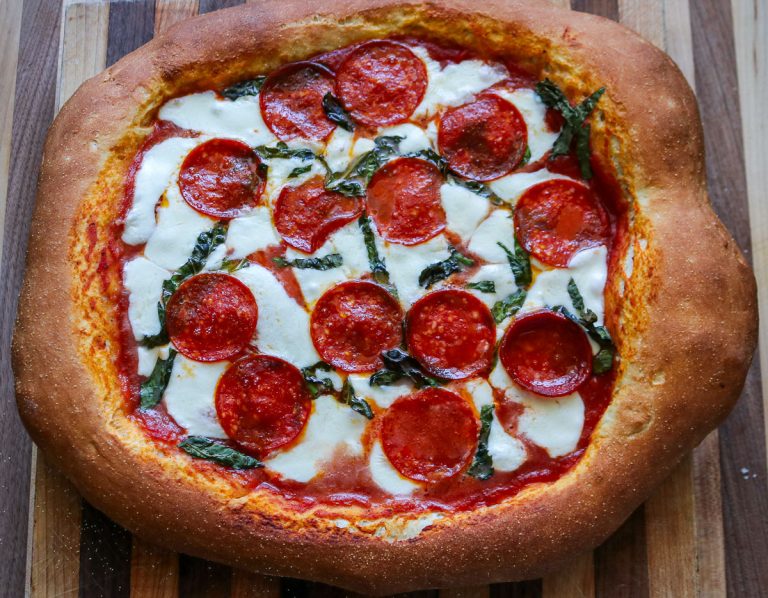
Yes. You can use a similar method to make focaccia-style pizza. Spread the dough in an oiled pan, partially bake it if necessary, and then add your sauce, cheese, and toppings.
Don’t Throw Away That Overproofed Dough!
Overproofing happens to every sourdough baker eventually. Thankfully, it does not mean all of your time and ingredients have gone to waste.
The next time your sourdough becomes sticky, deflated, and impossible to shape, turn it into focaccia. With a pan, plenty of olive oil, and a few simple seasonings, you can still make something delicious for your family.
More Easy Sourdough Recipes:
- Easy Beginner’s No-Knead Sourdough Bread
- Sourdough Discard Pizza Dough
- Sourdough Biscuits
- Sourdough Bagels
Printable Recipe:
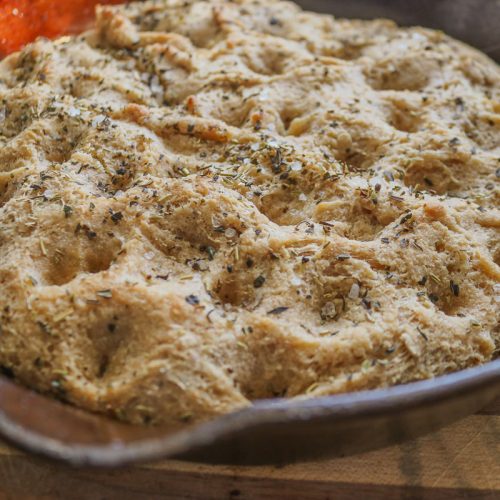
Focaccia from Overproofed Sourdough
Equipment
- 1 10 inch cast iron skillet or baking dish
Ingredients
- 1 overproofed dough sandwich bread dough, artisan boule, etc.
Instructions
- Prepare Your Pan
- Generously grease a cast iron skillet or small sheet pan with olive oil (no parchment or foil needed). This helps create a crispy crust.
- Press the Dough
- Gently turn your over-proofed sourdough dough onto the pan, pressing it evenly into a 1-1.5 inch thick layer. Rustic is fine!
- Add Herbs & Toppings
- Sprinkle with your choice of herbs (rosemary, oregano, etc.) and toppings like olives, garlic, or sun-dried tomatoes. For a sweet twist, add brown sugar and cinnamon. Get creative with your toppings!
- Dimple the Dough
- Wet your hands and use your fingertips to press dimples into the dough. This helps trap olive oil and toppings for a crispy, flavorful crust.
- Drizzle with Olive Oil
- Generously drizzle 3-4 tablespoons of olive oil over the top, ensuring the dough is well-coated for a crispy, golden crust.
- Bake to Perfection
- Preheat oven to 425°F (220°C) and bake for 20-25 minutes. It’s ready when golden brown and the internal temperature is 205-210°F. Check the bottom for a golden crust.
Notes
- Most basic sourdough sandwich bread or boule doughs will work.
- Avoid aggressively kneading or reshaping overproofed dough.
- Use wet or oiled hands if the dough is sticky.
- A smaller pan creates thicker, softer focaccia. A larger pan creates thinner, crispier focaccia.
- When using sun-dried tomatoes, choose oil-packed tomatoes and lightly press them into the dough to help prevent burning.
- Store cooled focaccia in an airtight container at room temperature for one to two days.
- Reheat at 350°F for 5 to 10 minutes to restore the crispy texture.



Totally forgot about my sourdough and wayyyy overproofed it. This recipe is delicious and super easy, way too easy for how good it tastes!
We used garlic powder, rosemary, thyme, basil and a pinch of coarse salt. Mmmmmm
Yes! This recipe has saved my over-proofed dough so many times lol. Glad you enjoyed it! 🙂
It was unorganized
I’m sorry this post wasn’t helpful for you. If you have any questions, I’m happy to help!
How would you suggest storing after baking if using the next day?
I like to store mine in a large ziplock bag or my beeswax bread bag at room temperature on the counter. Wrapping in aluminum foil or plastic wrap would also work though!
Excellent recipe! I’ve made a lot of focaccia but I think this was the best. Kitchen smelled fantastic too. Thanks for a great recipe for overproofed sourdough!
So glad it worked well for you! Homemade bread baking in the oven is the absolute best smell.
This recipe is so good and perfect for my overproofed dough. I don’t have a large cast iron pan so I used a sheet pan. I added Italian season and coarse salt. My family loved it and it’s great dipped in olive and balsamic! Hope I have many more over-proofed doughs.
Yum!! We love dipping our sourdough into olive oil and balsamic too. So glad you have enjoyed this recipe! 🙂
do you still use olive oil if you are making a sweet one with honey or brown sugar and cinnamon?
You could either use a light tasting olive oil, or butter. I personally would use butter to top my sweet focaccia because butter and cinnamon sugar is always a win in my book!
Thanks amazing!
So glad you enjoyed it!
Delicious!
So glad you liked it!
How big of a sourdough ball can a 10 inch skillet take?
That’s a good question! I have used my no-knead sourdough loaf in a 10 inch skillet with good results, so that would be about: 1231 grams or 2.7lbs of dough.
Recipe: Easy Beginner’s No Knead Sourdough Bread Recipe
Good for a mistakenly over proof dough . I only would say I’m not sure how to do the sun-dried tomatoes because it burnt my sun-dried tomatoes when I tried them as a topping.
That’s a bummer! Did you use sun-dried tomatoes packed in oil? I prefer using those over dehydrated because the extra oil prevents them from drying out and burning. Also, be sure you are lightly pressing them into the proofed dough before baking instead of just scattering them on top. Those would be my two suggestions for avoiding this, hope it helps! 🙂
Easy directions and worked perfectly! I overproofed my dough and it was still too good to trash… enter my first ever focaccia bread! With garlic and Parmesan!
Thank you for an easy recipie!
Oooh garlic and parmesan sounds delish!! So glad you enjoyed it!
You mention an “Unloaf”, but provided no link. I looked at your recipes and you have nothing labelled “Unloaf”. Help?
Sure thing! Here you go: https://gardenofmirth.com/easy-beginners-no-knead-sourdough-bread-recipe/
Overproofed – Life saver
Yes! Glad it worked for you!
Topped with a little dried rosemary, kalamata olives slices, sundried tomato pieces, and a little kosher salt. It was amazing! rave reviews from all my friends!
That sounds DIVINE!
Love that I could still use my over proofed dough in a quick easy recipe. Used brown sugar and cinnamon with olive oil on top. Perfection!!! Thanks for sharing
Oh! That sounds delish!