
Easy Flaky Sourdough Discard Biscuits (Buttery & No-Fail)
Last Updated on May 14, 2026 by Stephanie Gilpin
These sourdough biscuits are like the sourdough version of a flaky Grands-style biscuit — buttery, tender, and melt-in-your-mouth, but made with simple, wholesome ingredients and the added depth of tangy sourdough flavor.
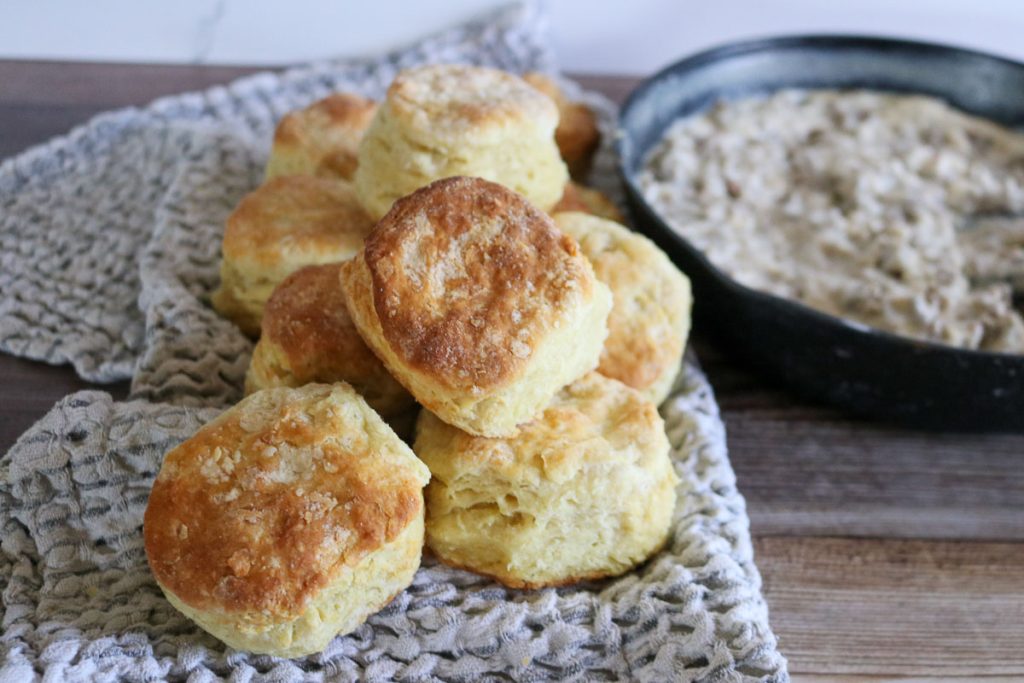
This recipe is made with sourdough discard and is one of my favorite ways to use up extra starter because it’s a treat the whole family enjoys.
Since the sourdough discard isn’t responsible for rising the dough, this recipe works perfectly with unfed discard straight from the fridge, even if it hasn’t been fed in a while.
If you’ve been around the blog for any length of time, you know we love homemade biscuits in all forms.
From old-fashioned lard biscuits to heavy cream biscuits and blueberry biscuits, biscuits are a staple in our kitchen. These flaky sourdough biscuits are no exception.
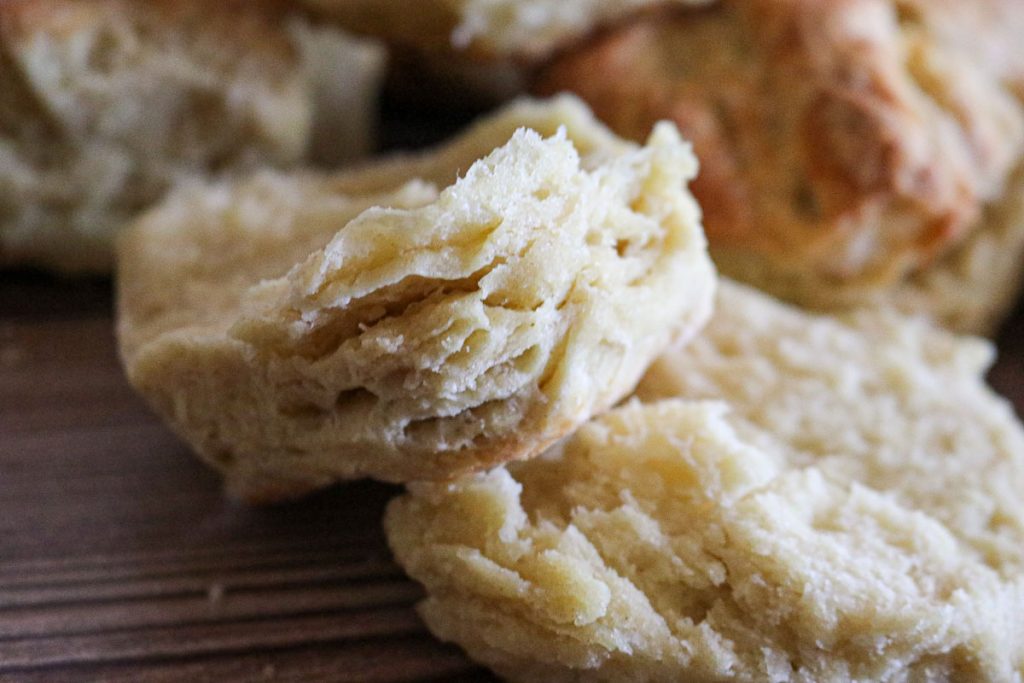
Why This Sourdough Biscuit Recipe Works
These biscuits aren’t just good — they’re reliable. The structure of this dough makes it incredibly versatile, whether you’re baking individual biscuits or using it as a base for other breakfast recipes.
This dough works well for:
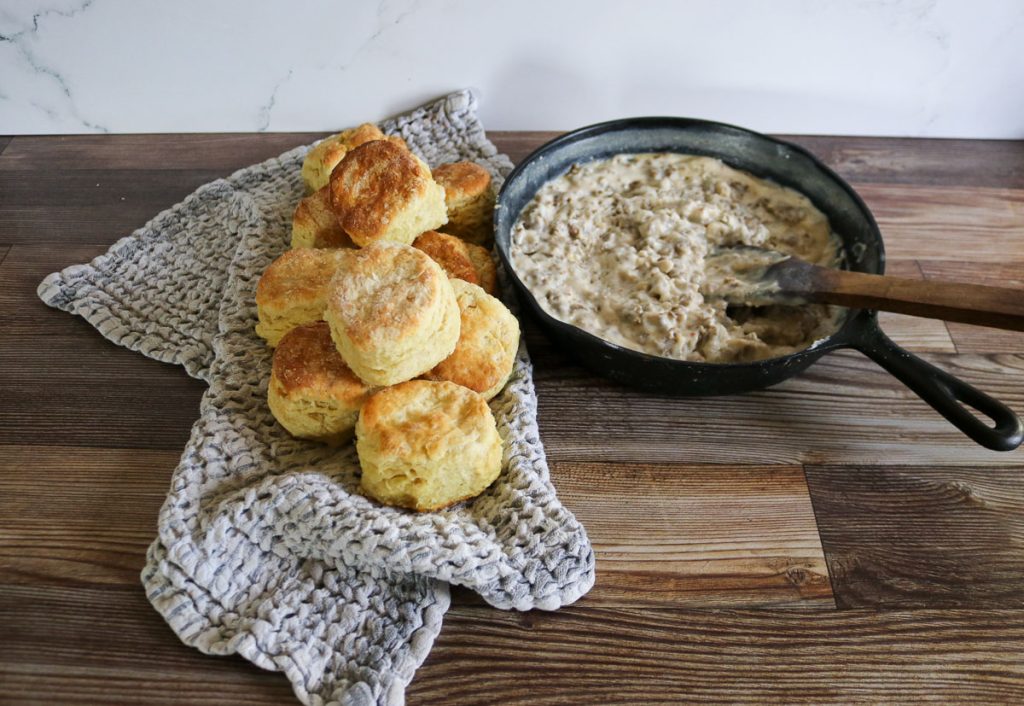
- classic biscuits and gravy
- breakfast casseroles
- skillet breakfasts
- freezer-friendly meal prep
(If you’re looking for a one-dish breakfast, this biscuit dough is the base for my sourdough sausage biscuit breakfast casserole.)
What Makes This Recipe Special
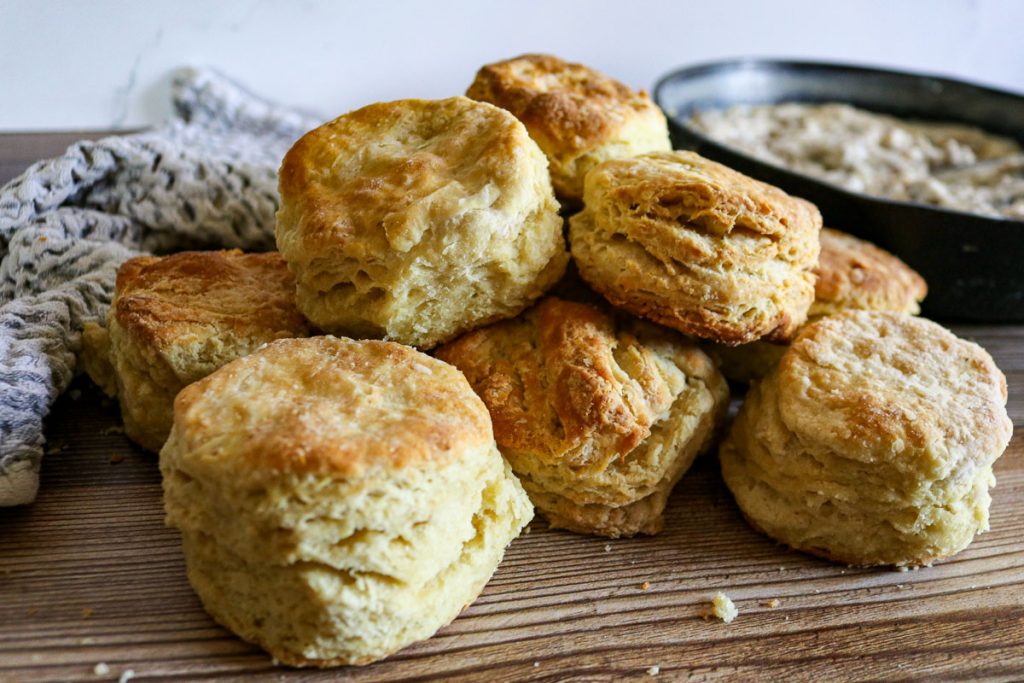
To create the ultimate buttery sourdough biscuits, this recipe uses a modified butter block method to create tender, flaky layers throughout the dough.
If you’re not a baker, don’t be intimidated by the term “butter block.” If you can fold a piece of paper, you can fold biscuit dough.
Here’s how it works:
- Cold butter is grated using a cheese grater
- The dough is shaped into a rectangle
- Butter is layered and folded into the dough in two simple folds
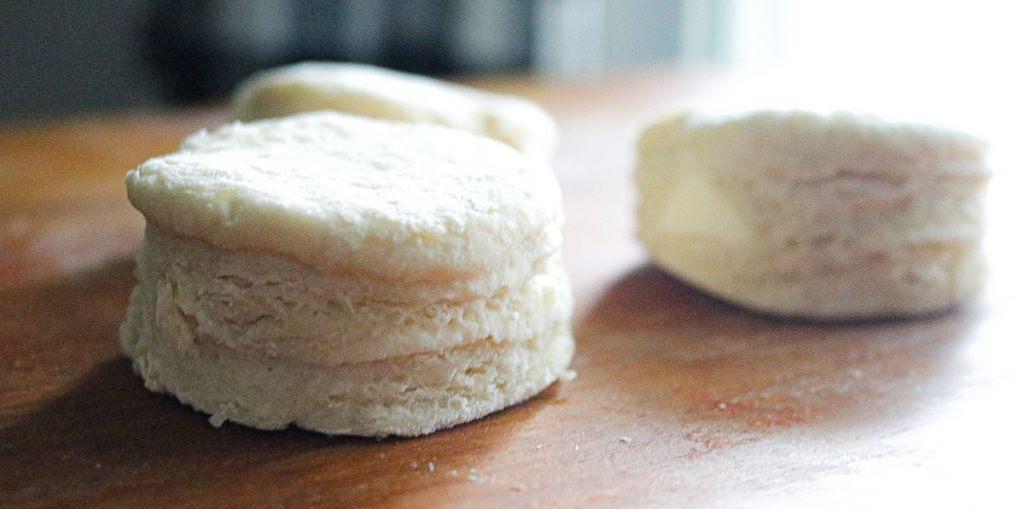
That’s it. This method creates visible layers without overworking the dough.
As an Amazon Associate, I earn from qualifying purchases. This post may contain affiliate links, which means I make a small commission at no extra cost to you. See my full disclosure here.
Another reason this recipe works so well is its simplicity. It uses basic ingredients I always have on hand — butter, flour, salt, sourdough discard, and milk — which means homemade biscuits are never far out of reach.
What Is Sourdough Discard?
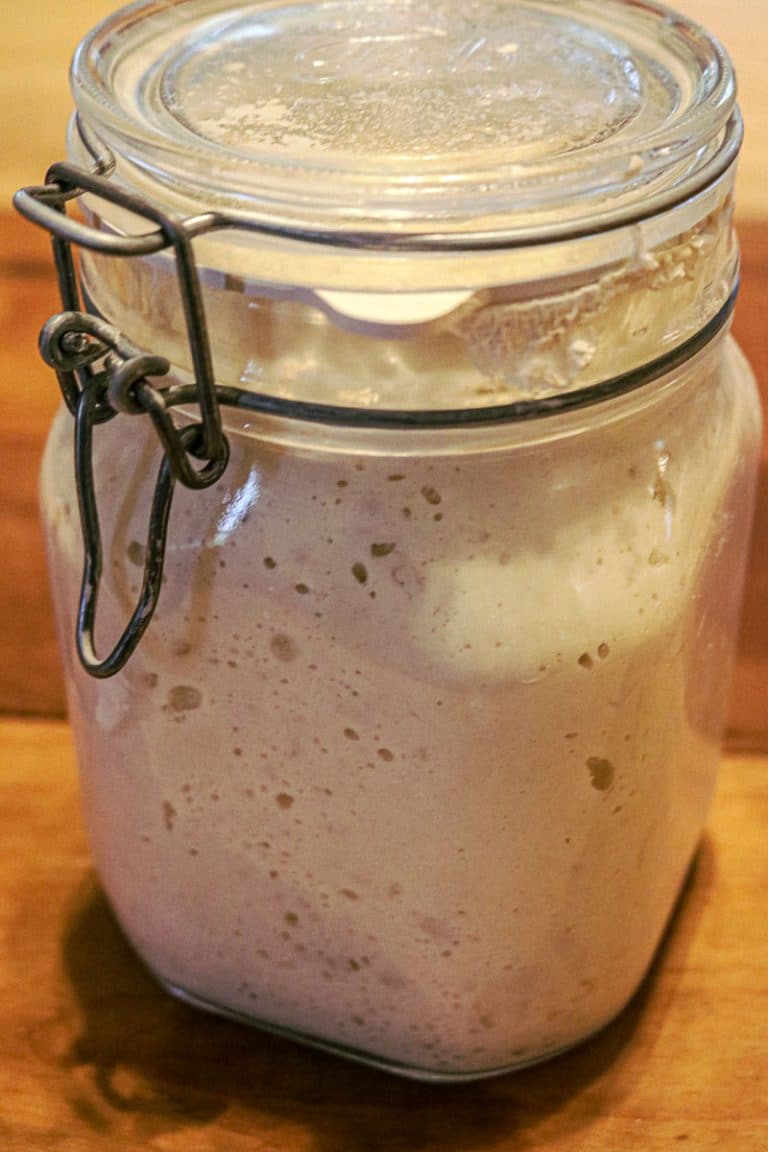
Sourdough discard is simply sourdough starter that has been removed from the main starter jar.
When you feed a sourdough starter, you remove a portion and feed what remains. To avoid excessive waste, many bakers discard a portion of starter to keep it at a manageable size. That removed portion is called discard.
Discard can be:
- recently fed or unfed
- used straight from the fridge
- stored in an airtight container for several months
Sourdough discard can be used in many recipes, including:
- sourdough discard pizza dough
- sourdough pancakes
- sourdough cookies
- pie crusts
This biscuit recipe works with discard straight from the refrigerator.
(For more details on baking with sourdough starter, see my sourdough discard resource page.)
How to Make Tall, Flaky Sourdough Biscuits
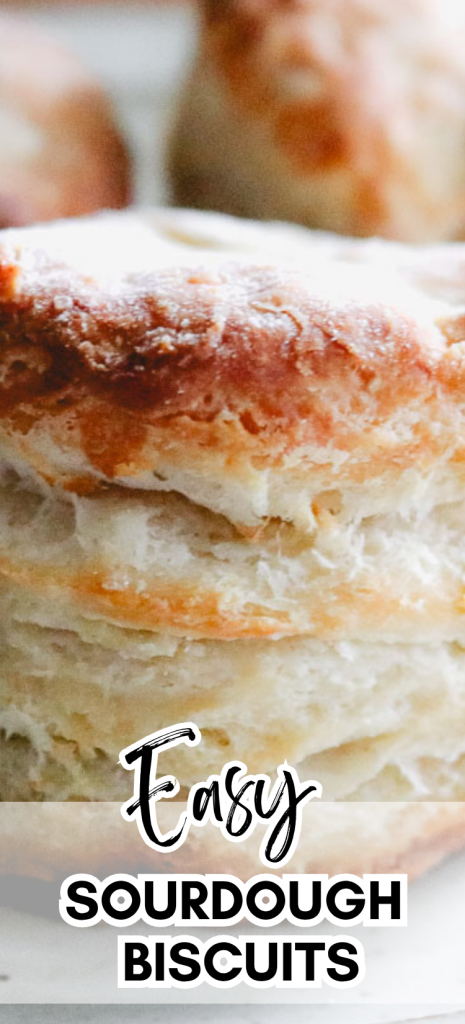
The key to tall, flaky biscuits is folding, not kneading.
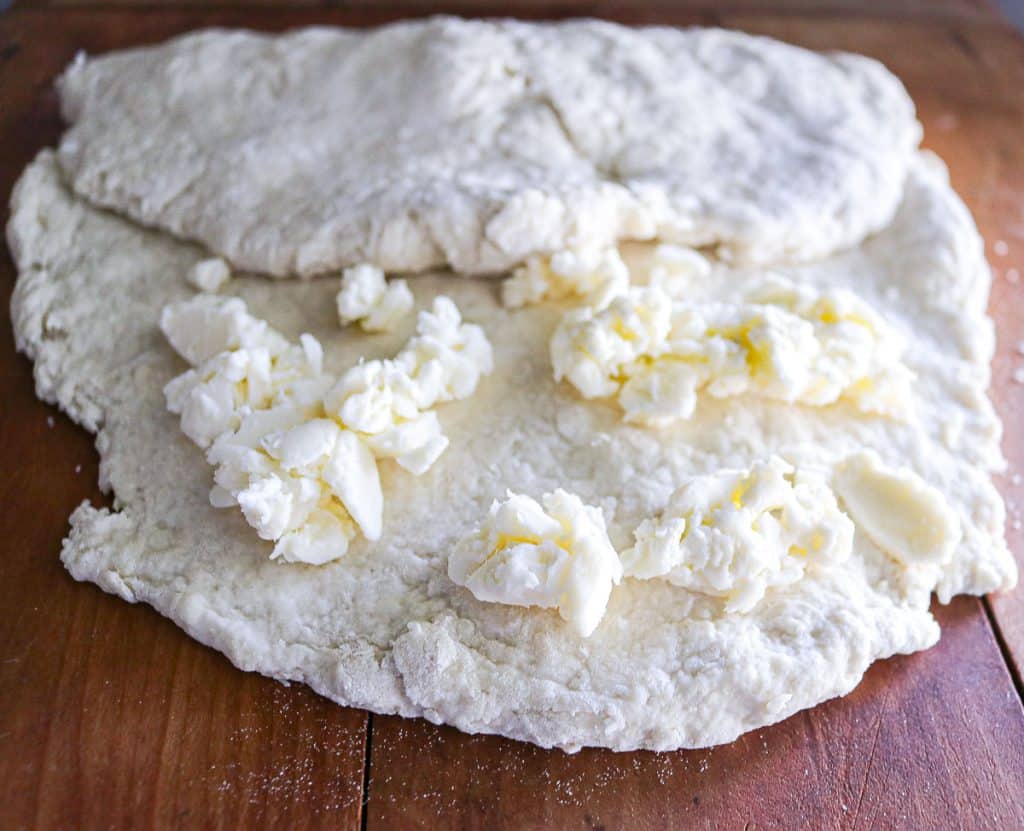
Here’s why that matters:
- Overworking biscuit dough creates a dense crumb
- Warm butter melts instead of creating steam pockets
- Cold butter creates lift as it melts during baking
When cutting biscuits, always press straight down with your cutter and lift straight up. Twisting seals the edges and prevents the biscuits from rising properly.
I like to use a 3 inch biscuit cutter like this one.
Helpful Kitchen Tools
- Biscuit cutter or mason jar
- Bench scraper
- Rolling pin
- Large bowl
- Danish dough whisk or pastry cutter
- Cast iron skillet or baking tray
A cast iron skillet is my preferred baking surface for biscuits, but either option works well. I like to use a flat griddle pan for my biscuits.
Sourdough Biscuit Ingredients
- All-purpose flour – allows precise control over leavening
- Grated cold butter – salted butter preferred
- Sugar – balances sourdough flavor
- Baking powder – primary leavening
- Baking soda – added lift
- Sourdough discard – unfed, straight from the fridge
- Milk – whole milk preferred, but 2% or buttermilk works
Step-by-Step Instructions
- In a large mixing bowl combine all purpose flour, salt, sugar, baking powder and baking soda. Whisk together the dry ingredients to make sure it is well incorporated.
- Using a pastry cutter or your hands, cut in half of the grated butter into the flour mixture until the dough resembles coarse pea-sized crumbs.
- Add in the milk and sourdough discard. Mix into a shaggy dough.
- Press dough into a 1-inch thick rectangle.
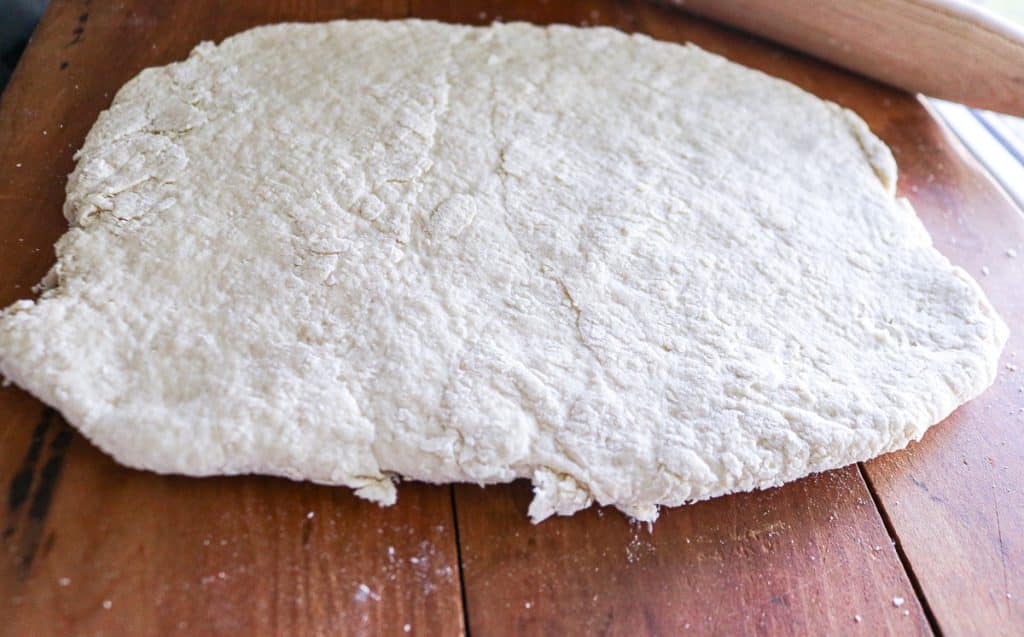
5. Layer half the reserved butter, fold, add remaining butter, and fold again.
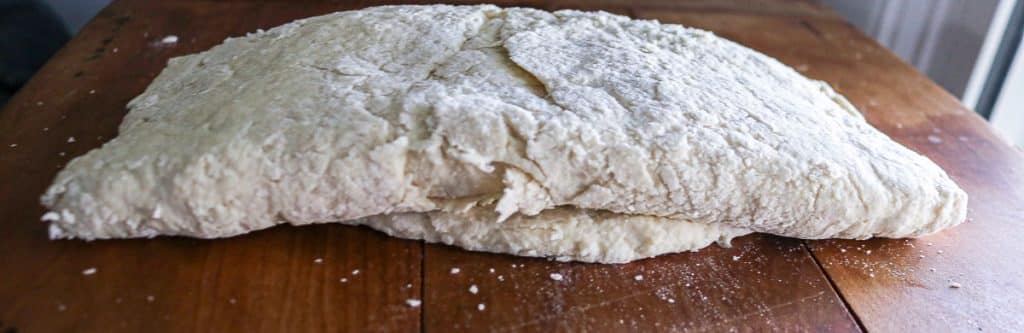
6. Roll dough to about 2 inches thick and cut biscuits without twisting.
7. Chill biscuits while oven preheats.
8. Preheat oven to 450°F. (Optional- but I like to preheat my cast iron skillet too)
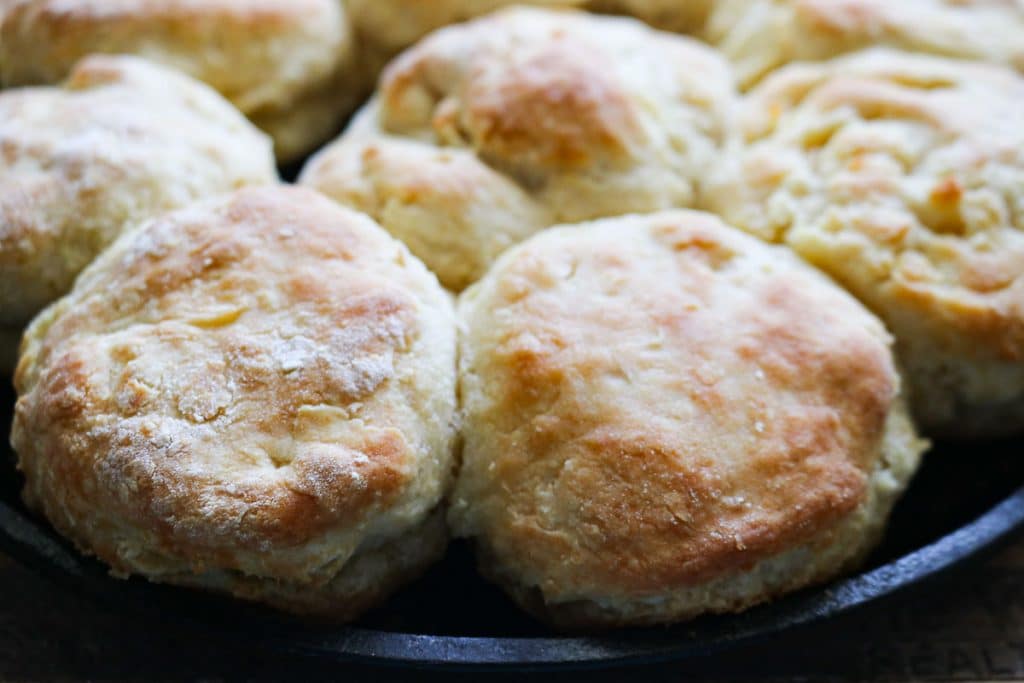
9. Bake 14–16 minutes until golden brown.
Storage Instructions
Store cooled biscuits in an airtight container or wrapped in plastic wrap at room temperature for up to 4 days. Reheat in the microwave for 15–30 seconds to restore texture.
Freezing Sourdough Biscuits (Unbaked or Baked)
Biscuits freeze exceptionally well.
To freeze:
- Flash freeze biscuits on a baking sheet
- Transfer to airtight freezer bags
- Store up to 3 months
Biscuits can be frozen before or after baking. Freezing makes it easy to bake only what you need and reduces food waste.
This is also what makes these biscuits ideal for breakfast casseroles and freezer-friendly meals.
Frequently Asked Questions
Can I use unfed sourdough discard?
Yes. This recipe is designed specifically for unfed sourdough discard and works well straight from the fridge.
Can I make the dough ahead of time?
Yes. The dough can be shaped and refrigerated for up to 24 hours before baking.
Can I use this dough in other recipes?
Yes. This biscuit dough works well in breakfast casseroles, skillet meals, and other savory breakfast recipes.
What if the butter gets too warm?
If the butter softens, place the dough in the refrigerator until firm, then continue.
Final Thoughts
These easy buttery sourdough discard biscuits are a dependable, versatile recipe that belongs in any from-scratch kitchen.
Whether you bake them fresh, freeze them for later, or use the dough as a base for breakfast bakes, they deliver consistent results every time.
Printable Recipe Card:
Easy Buttery Sourdough Biscuits
Ingredients
- 2 cups all purpose flour
- 1/2 cup grated cold butter salted
- 1 tablespoon white sugar
- 2 teaspoon baking powder
- 3/4 teaspoon baking soda
- 1 teaspoons salt
- 1 cup sourdough discard
- 1/2 cup milk
Instructions
- In a large bowl mix together the dry ingredients: flour, salt, sugar, baking soda and baking powder until well combined.
- Grate 1 stick of cold butter using a large box grater or cut the butter into very small cubes.
- Add half of the butter to the flour mixture. Work the butter into the flour using a pastry cutter or your hands until the mixture resembles coarse crumbs.
- Add the milk and sourdough discard to the dry mixture and stir to combine. The dough will be shaggy and sticky.
- Turn out the dough on a lightly floured surface and use your hands to press in to a 1 inch thick rectangle.
- Take the reserved butter and sprinkle half on the top of the dough rectangle.
- Fold the top of the biscuit dough over to cover the butter. Sprinkle on the remaining butter and fold the dough over again to encase the butter.
- Use a rolling pin to roll the dough out to 2 inches thick.
- Use a biscuit cutter to cut out biscuits. Place the biscuits in the fridge on a baking tray while you preheat the oven to 450 degrees.
- When the oven has preheated, remove the biscuits from the fridge and bake at 450 degrees for 14-16 minutes or until golden brown and cooked through.
Notes
-
- The more the dough is worked or kneaded, the less tender the crumb will be. Trust me, you want good, tender, biscuits.
-
- The more the dough is worked, the more likely it is you will heat up the butter in the biscuit dough. Cold butter ensures the biscuits will be flaky because as the butter slowly melts in the baking process it creates pockets of air in the dough. If the butter in the dough is warm when you bake the biscuits, the butter will just melt and ooze out of the dough instead.
Save This Recipe for Later:




The best and quickest
Thanks Sharron! So glad you loved them!
Have you tried making these the night before and baking the next morning? Can’t wait to try!
I haven’t, but I will definitely try that soon and report back!
I just finished making this recipe, I baked half of them and froze the other half. They look beautiful and taste even better! Very happy to have this recipe, thank you for sharing it. I will use this a lot!
So glad you enjoyed them! I love to make extra and freeze for quick breakfasts too!
These are SOOOO good!! My granddaughter and I made them today and made 2 extra batches to freeze for later. I made breakfast sandwiches with them. DELICIOUS!!!!
I am so glad your family likes them! I love to keep some in the freezer for quick breakfasts too!:)
The first thing that stood out to me in this recipe was the amount of salt, especially combined with the salted butter, so I reduced it to 1 teaspoon. The biscuits turned out delicious, and I’ll definitely be making them again
So happy to hear it worked well for you! 🙂